
GivingTuesday 2024 saw record-breaking numbers with a whopping $3.6 billion donated by a historic 36.1 million participants, just in the U.S. These numbers reflect a 16% increase in total dollars donated and a 7% increase in the number of contributors, reflecting a growing desire in donors to be generous and help make a difference.
So, what now? The campaigns were a success, and the numbers are in; what you do next is just as important as the hard work you put in before GivingTuesday. When you experience an influx of donations, how do you ensure your organization will be a good steward of those funds?
Now is the time to turn that momentum into strong financial stewardship. Managing the funds you received with clarity and intention not only prepares you for the next year but also sets you apart as a strong, accountable, and successful nonprofit committed to long-term sustainability.

Step 1: Evaluate Your Fundraising Success
The first step in any post-campaign process is taking stock of how your campaign performed both financially and operationally.
- Review your collected data. Direct ROI is usually top-of-mind, like understanding total revenue raised, average gift size, and acquisition versus retention. But it is just as beneficial (and likely encouraging) to analyze the indirect ROI as well: volunteer engagement, social reach, community involvement, and in-kind donations. Be sure to track participation rates and note how many supporters were involved in the campaign, as these metrics help demonstrate engagement and campaign impact.
- Review costs. What were your campaign costs? It’s important to consider this as you look at your fundraising. If you spent $500 on an initiative that only raised $400, it might be time to reconsider your campaign strategy.
- Compare against your goals. Were targets met or exceeded? Where did you fall short? Do any staff, board members, volunteers, or community members have feedback on any hiccups or wins of the day?
- Integrate with your systems. Use your CRM, fundraising platforms, or accounting systems to sync data, compare information from each platform, and ensure accuracy. The accuracy of your data will have a direct impact on analysis, approach, and planning for the future.

A post-campaign analysis turns numbers into strategy, helping you steward donors and plan smarter for next year. By leveraging your analysis, you can steer future campaigns and make informed budgeting decisions that strengthen your organization’s impact year-round.
Step 2: Report and Record GivingTuesday Finances Properly
The next critical step is ensuring that every dollar raised (and later, every dollar spent and allocated) is accurately tracked, categorized, and reported. It isn’t just about proper tracking; it’s about transparency, compliance, stewardship, and better decisions.
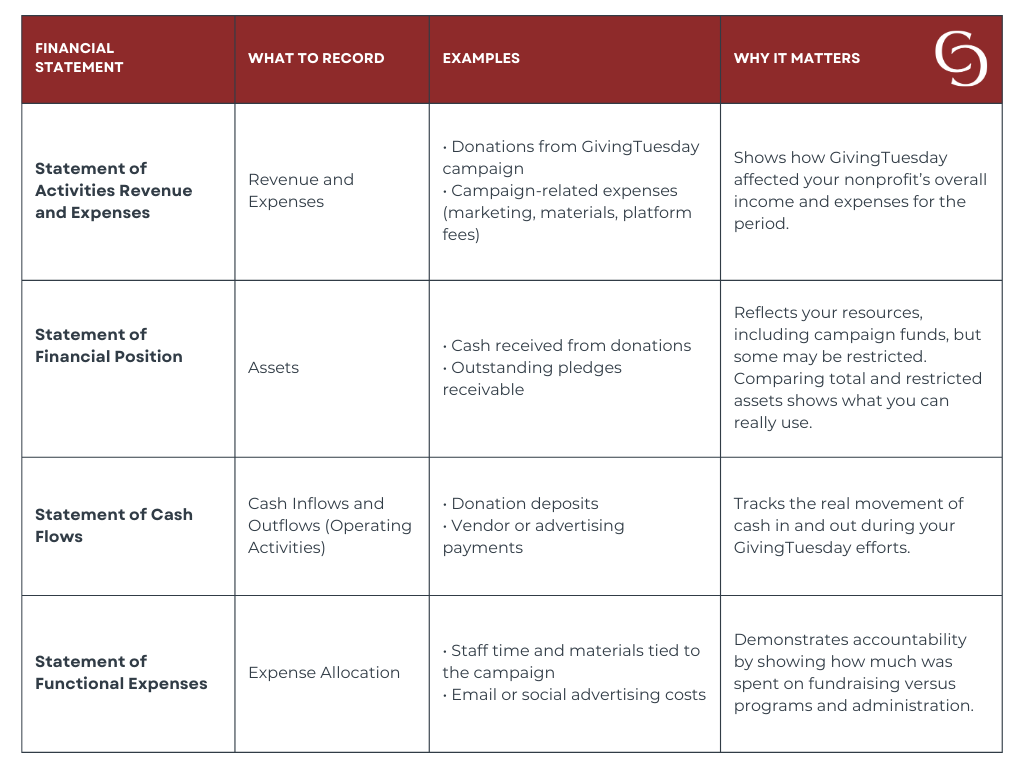
Your GivingTuesday revenue impacts several key areas, and it’s important to record each correctly:
- Revenue → Record all campaign donations under the statement of activities. This shows how much income the campaign generated and how it supports your overall mission.
- Assets → Shows your resources at a point in time, including campaign cash or pledges, giving stakeholders a clearer view of your financial footing. Because some funds may be restricted, comparing total assets with restricted net assets shows what’s actually available to spend.
- Cash Flows → Include cash inflows (donations received) and outflows (campaign expenses) under operating activities in your statement of cash flows.
- Expenses → Attribute costs properly on your statement of functional expenses, distinguishing between fundraising, program, and administrative expenses. Accurate categorization helps demonstrate sound stewardship and compliance with reporting standards.
Beyond accurate entry, make sure your financial reporting complies with GAAP standards and IRS requirements for exempt organizations. This includes properly classifying restricted versus unrestricted gifts—ensuring donor intent is honored, and funds are used appropriately.
Proper fund accounting and reporting are where many nonprofits run into challenges. Chazin’s team of nonprofit accounting experts can help you close out your campaign cleanly and in full compliance—so your records reflect your success and your donors’ trust remains strong. Accurate reporting today prevents headaches tomorrow.
Step 3: Demonstrate Your Campaign’s Impact
The impact of your campaign will certainly be data-driven, but this is where the fun part, the heart, comes in. Now that the numbers are in, it’s time to tell the story behind them. One that shows donors and stakeholders how their generosity translates into real-world change. Sharing this story does more than celebrate your success—it builds lasting trust, demonstrates accountability, and strengthens relationships.
Send thank-you notes and receipts promptly.
Show appreciation early and often. A timely thank-you note not only acknowledges a donor’s contribution but also reinforces that their gift was received, recorded, and valued. Include the exact amount given, note how it will be used, the date it was given, and share one or two tangible outcomes their donation will help achieve.
Chazin note: Non-cash contributions are subject to very specific IRS receipting requirements. Nonprofits frequently overlook these rules and unintentionally report these gifts incorrectly.
Share your results widely and creatively.
Don’t let your GivingTuesday success live only in spreadsheets. Turn your data into a story:
- Highlight results in annual reports, newsletters, social posts, and donor emails.
- Create impact visuals or infographics that connect dollars raised to impact delivered.
- Include testimonials, photos, or quotes from those who directly benefit from bringing the numbers to life.
Don’t wait too long to do this—sharing results within a couple of weeks of GivingTuesday will engage supporters and keep the excitement and momentum going.
Recognize your internal team and volunteers.
Behind every successful campaign are the staff, board members, and volunteers who made it happen. Recognize their time and effort publicly—through a team meeting, internal email, or social post. Internal acknowledgment not only boosts morale but also strengthens the culture of stewardship and gratitude within your organization.
Emphasize transparency in financial stewardship.
Your donors and supporters want to see that funds are managed responsibly and strategically. Share how donations were allocated: which portions supported programs, operations, fundraising efforts, or future initiatives. A brief financial snapshot or “where–the–money–went” visual helps reinforce your credibility and aligns with your commitment to transparency.
Donor Impact
When donors can see their impact, they are more likely to give again; 65% of donors say they will contribute more when they can clearly see the results of their giving. It’s crucial that donors and stakeholders see how funds are allocated, the change their contributions create, and that every dollar is managed responsibly—no matter the size of the donation.

Numbers tell the story, but context builds connection. When you pair accurate financial data with meaningful communication, you help donors feel the difference they’ve made—transforming transactions into trust and generosity into long-term relationships.
Step 4: Use Insights to Strengthen Year-End and Future Campaigns
GivingTuesday may be behind you, but the data you’ve gathered is just beginning to show its value. Now is the time to turn those numbers into insights and those insights into strategy. The patterns, ratios, and outcomes from your campaign can guide how you approach the rest of the year and prepare you for an even stronger fundraising season ahead.
Leverage your fundraising metrics and expense ratios.
Start by reviewing what worked and what didn’t. While you did this in Step 1, now’s the time to turn those numbers into an actionable plan for the next year. Analyze performance metrics like average gift size, donor retention, conversion rates, and the cost per dollar raised. Understanding these figures helps you identify which channels delivered the highest return and where you might need to adjust your approach for year-end giving.
💡 Pro Tip: Building graphics or short summaries can help you see the big picture—and provide you with a post-campaign snapshot containing insights you can present to your board.
Use financial insights to forecast and plan.
Your financial data is more than a compliance tool—it’s a roadmap for decision-making. Use real-time insights to:
- Forecast December cash flow and anticipate any operational needs
- Adjust your budget projections for the coming year based on new donor or revenue trends
- Identify opportunities to reinvest surplus funds strategically—such as building reserves, strengthening donor stewardship, or launching a new program
Connect GivingTuesday to your year-end campaign.
Nearly one-third of annual donations happen in December, and many donors who contribute on GivingTuesday are primed to give again before year-end. Use the momentum from your campaign to:
- Send follow-up stories showing the continued impact of GivingTuesday gifts
- Create targeted appeals for recurring giving or gift-matching opportunities
- Remind donors that their contributions can help close out the year strong
When analyzed thoughtfully, your GivingTuesday data can do more than measure success; it can inform it for sustained success and year-round stewardship. By translating those insights into intentional strategy, you’ll position your organization to plan proactively rather than reactively.
Step 5: Close the Books and Celebrate (In That Order)
You’re in the final stretch. Before you celebrate, close out your campaign with clarity and precision. Here’s the short list of tasks you should do in the days following GivingTuesday:
- Account for every donation and disbursement.
- Send thank-you notes to donors.
- Run and review updated financial reports.
- Share results widely and creatively.
- Document takeaways for next year.
- Celebrate your team’s efforts and success.
A clean close today builds a stronger foundation for every campaign that follows.

At Chazin, we ensure the accuracy of your financial data and transform that data into reporting that will assist in growth, planning, and empowerment so that you can lead with confidence and make better strategic decisions.
From GivingTuesday to Accounting Wednesday
GivingTuesday may have come and gone, but the real impact begins with what happens next. Clear records, accurate reporting, and thoughtful analysis ensure that every gift strengthens both your mission and your long-term financial health.
Whether you need support with fund accounting and reconciliations, donor-restricted fund management, financial reporting and audits, or year-end close and strategic planning, Chazin can help turn your GivingTuesday success into lasting financial clarity.